One Purpose Trading

From mine to market.
With confidence.

An independent commodity marketing agent connecting mineral producers across South Africa and the broader African continent with established buyers in China and India.

Why one purpose trading

For most mining companies, reaching an international buyer is harder than extracting the resource.

The ore body is rarely the problem. Getting paid properly for it, in a foreign market, on terms you can trust, usually is. A producer who has spent years building a mining operation then has to learn a second business overnight: international pricing, parity and penalties, vessel schedules, port terminal rules, letters of credit, export permits, and the paperwork that stands between a stockpile and a shipment.

In that gap, margin quietly disappears. Multiple intermediaries each take a slice without adding capability. Logistics fragment across parties who share no interest in the outcome. Pricing arrives verbally and is adjusted after the material has already moved. Buyer relationships change hands, and with them the certainty of the next order.

One Purpose Trading exists to close that gap. We are an independent commodity marketing agent. We originate and hold the buyer relationship, agree the commercial terms, structure the price, and then carry the shipment through logistics, export compliance and final delivery. One counterparty, one contract, one accountable party, from mine gate to international market.

Because we are backed by the operational capability of One Purpose Logistics and supported by strategic partnerships with established market leaders, we are not a broker with a contact list. We are the commercial arm of a business that already moves bulk, cross-border and abnormal freight across Southern Africa, and we are measured on whether the vessel loads on the nominated laycan.
What we do

One integrated solution for the whole transaction.

01

Originate & source

We qualify the product, the tonnage and the tenure of supply, then match it to a buyer who actually wants that specification. Sourcing and offtake agreements are put in writing.

02

Price & structure

Negotiation, price formula, parity and currency are agreed and documented before the material moves, never after. Both parties know the number and the mechanism behind it.

03

Coordinate & move

Mine gate collection, road and rail, terminal handling, stevedoring, vessel nomination and laycan scheduling, coordinated by one team, backed by One Purpose Logistics.

04

Verify & deliver

Independent sampling and assay, weighbridge reconciliation, the full export document pack, and settlement, with a clear record of every stage of the transaction.

Commodities we source & deliver

Bulk minerals, from African pit face to export vessel.

We concentrate on commodities where Southern Africa holds a genuine structural advantage in grade, scale or port access, and where we can stand behind the specification. Every parcel is sampled and assayed independently, and priced against a formula both parties can verify.

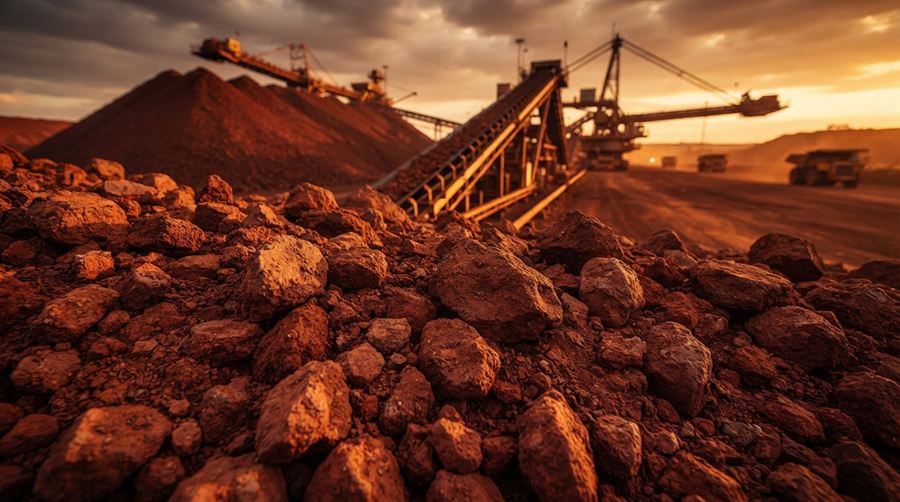
Iron ore stockpile prepared for export from South Africa

Iron Ore

The backbone of global steelmaking. We move both lump and fines for sinter and direct-reduction routes, matched to the furnace profile of the receiving mill rather than sold as an anonymous parcel. Grade, alumina and moisture are established before the vessel is nominated.

Typical buyers: integrated steel mills, sinter plants and trading houses in China and India.

Manganese ore for steel and battery markets

Manganese

Indispensable to steel as a deoxidiser and desulphuriser, and increasingly strategic in battery chemistry. South Africa sits on the largest manganese resource base in the world, which puts local producers in a strong position, provided the product reaches a smelter that values its particular grade and sizing.

Typical buyers: ferroalloy producers, steel mills and battery-material processors.

Chrome ore and chromite for ferrochrome production

Chrome

Chromite ore feeding ferrochrome smelters, stainless steel producers, foundries and refractory manufacturers. The Cr:Fe ratio and lump-to-fines split decide which buyer the parcel suits, so we qualify the material before we price it.

Typical buyers: ferrochrome smelters, stainless steel producers and foundries in Asia.

Copper cathode and concentrate for export

Copper

The metal the energy transition runs on: electrical grids, motors, electric vehicles, construction and telecommunications. We work with both cathode and concentrate, and treat assay and payable terms with the precision the copper market expects.

Typical buyers: smelters, refiners, wire and cable manufacturers, and cathode consumers.

Tantalite concentrate for capacitors and electronics

Tantalite

Tantalum-bearing concentrate destined for capacitor manufacturers and specialist alloy producers in electronics, aerospace and medical applications. Because this is a conflict-minerals-sensitive supply chain, every parcel is documented and traceable to source. A producer with clean paperwork is worth more to a buyer than one with a lower headline price.

Typical buyers: capacitor and electronics manufacturers, alloy and superalloy producers.

Niobium and ferro-niobium for high-strength steel alloys

Niobium

Used in tiny quantities to make steels dramatically stronger in high-strength low-alloy (HSLA) grades for pipelines, automotive bodies, structural steel and superalloys. Demand is global and supply is concentrated, which makes a reliable, well-documented route to market genuinely valuable for producers outside the traditional sources.

Typical buyers: ferroalloy producers, specialty steelmakers and alloy manufacturers.

Sourcing something else? We are regularly asked about additional minerals and industrial commodities where a producer has consistent tonnage and a buyer needs certainty. If you have the resource and the tenure, talk to our trading desk. We would rather assess it properly than guess.

Where we sell

Two markets that decide the price of African bulk minerals.

We do not chase volume for its own sake. We position product where demand, pricing and long-term value align, into markets that have the industrial capacity to consume it, and the payment discipline to settle for it.

01

China

The world's dominant buyer of bulk industrial minerals, and the destination that sets the benchmark for iron ore, manganese, chrome and ferroalloys. China's steel mills and smelters consume at a scale that simply does not exist elsewhere, which is why access to them determines the commercial value of a Southern African deposit.

Our role is not to deliver a parcel and disappear. It is to establish a relationship with the right buyer for your specific grade, and to keep it, survey after survey.

02

India

India is the emerging growth market. Indian steel mills require high-grade ore while domestic supply is predominantly low-grade, which creates a structural import requirement that South African high-grade product is well positioned to fill. Long-term investment in infrastructure, manufacturing and renewable energy is compounding that demand.

Because the requirement is structural rather than opportunistic, this is where a producer can realistically build a recurring, contracted outlet rather than relying on spot sales.

Behind both markets sits the commercial reality that a producer cannot verify alone: index movements, freight and parity, grade penalties, port congestion and the buyer's own order book. We hold that information across transactions, which is why we can tell a producer what the material is genuinely worth in a given week, and why we are prepared to put a number on the table before it moves.

How a trade actually runs

Eight stages between a stockpile and a settled invoice.

Successful commodity trading extends far beyond introducing a producer to a buyer. Every transaction depends on disciplined coordination across commercial negotiation, logistics, export compliance and market execution. When those functions operate independently, inefficiencies appear: shipments slip, costs climb and value quietly erodes. We run them as a single operating model with one point of coordination, from the first producer engagement through to final delivery.

01

Qualify the opportunity

Mine, commodity, available tonnage, tenure of supply and current route to market. We establish what actually exists before anyone commits to a number.

02

Technical assessment

Representative sampling and assay, sizing and lump-to-fines split, moisture and penalty elements. The specification decides which buyer the parcel suits.

03

Buyer matching

We route the spec to a mill, smelter or processor that genuinely wants that grade, not to the first party who answers the phone.

04

Commercial agreement

Offtake or spot contract setting the price formula, parity, currency, payment terms and the basis on which quality and quantity will be determined.

05

Logistics & laycan planning

Mine gate collection, road and rail movement, terminal booking, stevedoring and vessel nomination, scheduled backwards from the laycan so the cargo is at the quay when the ship is.

06

Export compliance

Export permits and regulatory clearances, certificate of origin, customs and SARS documentation, plus counterparty KYC and sanctions screening on both sides of the transaction.

07

Loading & independent inspection

Sampling and analysis by an independent inspector at the agreed point, weighbridge records matched to vessel figures, and a quality and quantity determination neither party can dispute.

08

Settlement & reconciliation

Final invoice against verified figures, payment released on the agreed terms, and a complete transaction record that makes the next parcel faster and cheaper to place.

For the producer, the practical difference is simple: instead of managing five suppliers and a buyer you have never met, you deal with one counterparty who carries the commercial, logistical and compliance risk between your gate and the vessel.

Quality, verification & trade terms

Nothing in a mineral shipment should be left to interpretation.

Disputes in commodity trading rarely start with bad faith. They start with an unclear determination basis: whose laboratory, which sample, what moisture, which weighbridge. We remove that ambiguity before the first tonne moves, in writing.

How quality is established

  • Independent inspection: sampling and analysis by a recognised third-party inspector, not by either trading party's own laboratory.
  • Representative sampling: taken at the point and by the method agreed in the contract, whether at the mine, the stockpile or on loading.
  • Grade and moisture determination: the figures that price, escalate or penalise a parcel, established before settlement rather than argued after it.
  • Sizing and physical spec: lump-to-fines ratio and sizing distribution, which determine whether a smelter or a sinter plant is the right home for the material.
  • Weighbridge reconciliation: mine or terminal weights matched against vessel figures, with agreed tolerance applied transparently.
  • Certificates: certificate of analysis and quality certificates issued as part of the shipping document pack.

How the commercial side is secured

  • Written price mechanism: an agreed formula referencing a recognised index or benchmark, adjusted for verified grade, moisture and penalties.
  • Delivery terms: structured around the appropriate Incoterms for the corridor and the buyer, so responsibility for freight, risk and insurance is unambiguous.
  • Payment security: confirmed irrevocable letters of credit, documents against payment arrangements, or telegraphic transfer with agreed release conditions, matched to the counterparty.
  • Full export documentation: commercial invoice, packing list, certificate of origin, bill of lading, quality and quantity certificates, and customs/export records.
  • Counterparty due diligence: KYC and sanctions screening on both sides, with export permits and regulatory clearances in place before shipment.
  • Traceability: mine-to-market documentation that stands up to buyer and regulatory scrutiny, which matters most in sensitive supply chains.

This is the unglamorous part of trading, and it is the part that decides whether a producer gets paid on time. We would rather spend an extra two weeks documenting a transaction properly than spend six months chasing a determination dispute with a buyer twelve thousand kilometres away.

The logistics advantage

Backed by a logistics business, not a trading desk alone.

Most marketing agents sell a parcel and hand the physical problem to someone else. We own the physical problem.

One Purpose Trading sits inside the same group as One Purpose Logistics, which moves bulk, cross-border and abnormal freight across Southern Africa every day. That means the trucks, the permits, the terminal relationships and the escalation path already exist before a trade is agreed. They are not subcontracted into existence after the fact.

Our commercial team works the corridor from mine to vessel through the major Southern African export gateways of Richards Bay, Durban, Maputo and Walvis Bay, with experience in port terminal operations, stockpile management and laycan scheduling. Cargo is planned backwards from the vessel date, so product arrives at the quay when the ship does rather than when the truck happens to be available.

Where a cross-border move is required to reach a port, we handle it under the same accountability as the trade: permits, border documentation and the compliance that comes with moving mineral cargo across a frontier.

Why producers work with us

One counterparty

Sourcing, pricing, logistics, compliance and delivery under a single contract and a single point of accountability, not five suppliers and a buyer.

Visibility, not anonymity

You know who is buying your product, at what price and on what basis. Intermediaries that exist only to obscure the counterparty are removed from the chain.

Priced before it moves

The mechanism is agreed and documented in advance, then applied to independently verified figures, not negotiated after the material has left your gate.

Aggregation into real parcels

We combine tonnage into export-sized parcels, so a producer who could never fill a vessel on their own can still reach the buyers who only buy by the vessel.

Established market relationships

Supported by strategic partnerships with established market leaders, giving our product access to channels that take years to build independently.

Trading FAQ

The questions producers ask us before they trust us with a parcel.

What is a commodity marketing agent?

A commodity marketing agent is the commercial bridge between a mineral producer and the international buyer. We originate the buyer relationship, agree the offtake or spot terms, structure the price, coordinate the logistics and manage the export documentation. The producer keeps full visibility of who is buying the product, at what price, and when it will be collected.

Which commodities does One Purpose Trading source and deliver?

Iron ore, manganese, chrome, copper, tantalite and niobium, with a focus on bulk minerals that move from African mine gate to export vessel.

Which markets does One Purpose Trading sell into?

China is our primary destination market and remains the world's dominant buyer of bulk industrial minerals. India is the emerging growth market: Indian steel mills require high-grade ore while domestic supply is predominantly low-grade, which creates a structural import requirement that South African high-grade product is well positioned to fill.

How is the price of a mineral shipment agreed?

Pricing is agreed before the material moves and is written into the contract as a formula rather than a verbal estimate. Depending on the commodity, that formula references an agreed index or benchmark and is adjusted for the verified grade, moisture and any penalty elements established by independent inspection at loading.

Who arranges logistics, shipping and export documentation?

We do, end to end. Mine gate collection, road and rail movement, port terminal handling, stevedoring, vessel nomination and laycan scheduling, together with the full export document pack, are managed by one accountable team and backed by the operational capability of One Purpose Logistics.

How is quality verified before shipment?

Quality is verified by independent inspection rather than by either party's own laboratory. Sampling is taken at the agreed point, analysed for grade and moisture, and reconciled against the contract specification. Weighbridge records at the mine or terminal are matched to the vessel's figures, so the tonnage invoiced is the tonnage shipped.

Do you work with small and mid-sized producers?

Yes. Smaller producers are often the ones who need a marketing partner most, because a single vessel parcel is beyond the reach of an individual mine and intermediaries on both ends quietly erode the margin. We aggregate tonnage into export-sized parcels and carry the commercial, logistics and compliance burden on the producer's behalf.

What payment and security terms does One Purpose Trading work on?

Terms are structured to protect both sides of the transaction and are agreed per counterparty and corridor. Depending on the relationship and the market, we work on confirmed irrevocable letters of credit, documents against payment arrangements, or telegraphic transfer with agreed release conditions.

Still have a question about your specific commodity, tonnage or destination? Ask our trading desk directly. We would rather give you a considered answer than a quick one.

Next step

Bring us a mineral. We will bring the market.

Anele Boqwana, Lead Commodity Originator at One Purpose Trading01
Anele Boqwana
Lead Commodity Originator — Trading

Your direct line into our trading desk. Tell us the commodity, the tonnage you can commit on a recurring basis, and where it currently goes. If there is a better market for it, we will show you the numbers behind it.

082 821 7786

anele@onepurposelogistics.com

4 Wells Street, Farrarmere
Benoni, Gauteng 1501, South Africa

Enquire about a trade

Company profile

One Purpose Trading Company Profile

The full profile covers our positioning as an independent commodity marketing agent, the markets we sell into, our operating model and the commodities we source and deliver. Useful if you are evaluating us as a marketing partner or preparing an internal proposal.

View Company Profile (PDF)

Opens in a new tab. No form required.

One Purpose Trading is part of the One Purpose Holdings group. For the physical side of the supply chain, see our logistics solutions; for abnormal loads and project cargo, see our abnormal division; to see your shipments end to end, explore the OneView platform; and to meet the team behind the business, read about us.

Have a mineral to move, or a market to open?

Send us an assay, a tonnage and a destination. We will come back with a route to market, a pricing structure and an execution plan.

Talk to our Trading Desk →